Gibson Guitar Corp.

Arnold Berlin thumbnail

Arnold Berlin

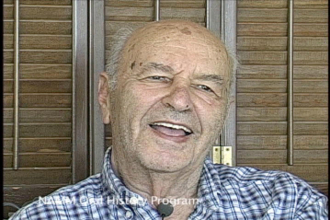
Arnold Berlin was a one-time president of Chicago Musical Instruments (CMI) and co-founder of Norlin Music Corp. He is also Mr. M.H. Berlin’s son, one of the true icons of the industry. Arnie spoke of how his father got started in the industry as well as how he was able to grow the company into one of the major players within the music products industry. Arnie also spoke of his own career, which began in the late 1950s.

Bruce Bolen thumbnail

Bruce Bolen

Bruce Bolen has had a long and colorful career in the music industry spanning nearly 50 years and with two of the best-known guitar makers in the world. Mr. M.H. Berlin, the president of Chicago Musical Instruments (CMI), first hired Bruce into the industry. At the time, CMI owned Gibson Guitars and Bruce worked in marketing their products. In the 1980s, after Fender was bought from CBS, Bruce was hired to run the artist relations department, which he had also done for a while at Gibson.

Walter Carter thumbnail

Walter Carter

Walter Carter wrote the book on the Gibson Guitar Company’s history. Along the way, he developed friendships with many of the old timers who worked the assembly line before “assembly line” was even a popular term. He spent months researching what was thought to be true to confirm it. Along the way, he fought to showcase those efforts of innovators and engineers whose work would otherwise be lost and unnoted. Walter became the first historian for Gibson and worked hard to do what is so important in our industry--preserve it.
 

Duane Eddy thumbnail

Duane Eddy

Duane Eddy has been a strong influence on generations of guitarists and played a key role in making instrumental songs viable as hit makers in popular music. Duane recorded several hit records beginning in the late 1950s, which continued into the 1960s including “Rebel Rouser” and “Boss Guitar.” His driving bass line turned many players on to the guitar in the heyday of rock and roll including John Lennon and Jimmy Page. Duane became a much-recorded studio musician and continues to record and perform. 

Wilbur Fuller thumbnail

Wilbur Fuller

Wilbur Fuller took to woodwork at a young age.  When he was 16, from the instructions in a magazine, he made a desk, which still stands in the corner of his small farmhouse in western Michigan.  In 1954, his cousin Walter, who engineered the Gibson amplifier in nearby Kalamazoo, told Wilbur of an opening in the company’s wood shop.

B.B. King thumbnail

B.B. King

B.B. King spoke of his great love of music making and provided sound advice for those who want to play an instrument. He smiled as he recalled buying his first guitar amplifier and spoke with a warm voice when reflecting on his greatest musical influences. We ended the interview with his statement, "Hi, I'm B.B. King and I believe in music."


Bill Lawrence thumbnail

Bill Lawrence

Bill Lawrence is known for his pick-up design and his long career as a German guitarist. In fact, when visiting the Framus Museum in March Germany, you can learn of his influential musical career when he was known as Billy Lorento. Always interested in electronic, he applied his two interests and soon developed his own pick-up for the guitar.

Trini Lopez thumbnail

Trini Lopez

Trini Lopez became an early Latin-American pop singer with a string of recordings in the late 1950s and 60s including "If I Had a Hammer" and "Lemon Tree." Frank Sinatra took him under his wing and signed Trini to an eight year record contract that included the talents of Sinatra's arranger Don Costa to oversee Trini's projects. Trini's name recognition prompted Gibson Guitar Company to approach Trini to develop his own signature guitar model.

Scotty Moore thumbnail

Scotty Moore

Scotty Moore set a date and time on July 4, 1954, to get together with a young singer who wanted to record with Sam Philips at Sun Records in Memphis. Sam asked Scotty, who had recorded with several bands on Sun, to call this kid and work out a few songs. This was his first meeting with Elvis Presley. Playing his Gibson ES335, Scotty can be heard on every recording the King made up through the soundtrack for “Jailhouse Rock” in 1957. When Elvis returned from the United States Army, Scotty returned to Elvis’ side on nearly all of his recordings until Elvis’ comeback television special of 1968. Scotty’s remarkable and influential guitar style revolutionized rock and roll.

Les Paul thumbnail

Les Paul

Les Paul will forever be known for his role in the popularity of the electric guitar, the design of the Gibson Les Paul guitar, the multi track recording, the early guitar effects, and his million selling recordings with wife Mary Ford. However, did you know Les also appeared as product endorsee in more NAMM shows than just about any other artist? From the 1950s onward Les stood in the Gibson booth shaking hands and signing autographs while promoting the guitar line. In fact in 2006, after the Gibson Company purchased Baldwin Pianos, Les was at the NAMM show promoting the Les Paul Baldwin Piano. Les passed away in August 2009 at the age of 94.

© 2010 NAMM, the International Music Products Association