guitar strings

Antonio Acosta thumbnail

Antonio Acosta

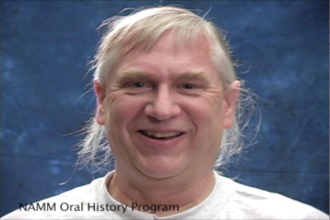
 Tony Acosta had a dream to make the world’s finest classical guitar strings.  He began working nights to perfect his product and build relationships within the industry and slowly gathered the needed equipment. Several years later, when he quit his day job working for an airline, his friends thought he was crazy to leave before his retirement just five years away.  Tony wanted nothing more than to see his dream come true, so he took the risk and established the renowned Luthier Strings Company.  “You must follow your dreams” he said with a smile. 


Sterling Ball thumbnail

Sterling Ball

Sterling Ball’s great-grandfather was a successful songwriter in the golden era of Tin Pan Alley and wrote a series of hits such as “When Irish Eyes Are Smiling” and "Mother Machree” His father was Ernie Ball, the innovator and musician who revolutionized the music industry with his strings and in standardizing string gauges. Sterling expanded on his father’s company by bringing in the Music Man brand and in designing a new series of guitars and products beginning in the 1970s. Sterling has not slowed down since. Among his many contributions to the industry was when he served on the NAMM Board and created programs to encourage players of all ages to pick up an instrument and have fun.

Dick Boak thumbnail

Dick Boak

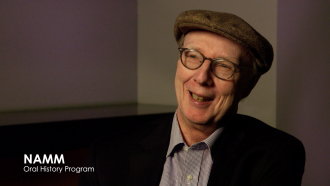
Dick Boak has served as Director of Artist Relations for the CF Martin Guitar Company during the development of the popular signature series product line, as well as for such historic projects as Martin's One Millionth Guitar.  Dick has been passionate about the company's important past ever since joining the company in 1976 and has long served as Martin's historian.  Dick studied the history of the company, which was formed in 1833, and wrote the book "Martin Guitar Masterpieces" in 2005.  Over the years Dick worked long and hard to establish the now popular Artist Signature Guitars series working with Eric Clapton, and the Limited Edition series, which began in 1994 with the Gene Autry guitar.    

Jim D'Addario thumbnail

Jim D'Addario

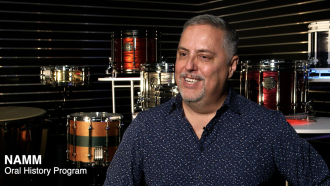
Jim D’Addario has worked long and hard within the research and development arm of D’Addario, along with his brother John Jr. Headed by Jim, the engineering department has accumulated many important manufacturing and product patents in the field of music strings and musical accessories. He also helped expand the product line by important acquisitions, such as Evans Drumheads (1995) Planet Waves (1998), HQ Practice Products and Rico Reeds (both in 2004). Jim also has a strong interest in the history of not only his family and the family business but the background of the company and products the family has acquired.

John D'Addario thumbnail

John D'Addario

John D’Addario’s family history in the music industry can be traced back to the 1670s when Donato D’Addario worked as a “cordaro” – the Italian word for “string maker.” 
Since that time the family has perfected the art of handcrafting strings as well as other music accessories. John’s father had a great interest in alternative synthetic substitutes for the animal products and worked hard to design a new style of string following World War II that would revolutionize the industry. John and his father, John Sr., and John’s brother Jim, introduced a new brand of strings in 1974 and built a new factory in Lynbrook, New York.

Martyn How thumbnail

Martyn How

Martyn How is the Commercial Director or the British string company Rotosound.  Martyn and his brother Jason carry on the traditions of their pioneering father who started the guitar and bass string company in 1958.  Martyn oversees the sales and marketing for the company as well as performer endorsements and dealer relations.  Martyn’s many stories of his life in the industry range in topic from Jimi Hendrix and John Entwistle to products such as their famed RS66LD swing bass string set to the company&rsq

Jason How thumbnail

Jason How

Jason How is the CEO and Chairman of Rotosound, the British string company his father formed in 1958.  James How was an innovative toolmaker who designed equipment that could produce various guitar string gauges in high numbers while retaining consistency.  Jason played a key role in the company’s expansion in market size and product line as well as in modernizing the company’s computer systems while ensuring his father’s original designs stay intact.


Neil Lilien thumbnail

Neil Lilien

Neil Lilien has been a life long supporter of the arts, playing music since he was a child and growing up to own one of the finest names in stringed instruments. Neil worked for Guild Guitars for nearly 20 years before purchasing Meisel Stringed Instruments in 1984. The company, which had also been known as C. Meisel & Company, is one of the world’s best-known providers of violins and related products. Over the years, Neil has also been an active leader within the music products industry, supporting music advocacy groups and serving as president of the National Council of Music Importers and Exporters (NCMIE), treasurer of the American Music Conference (AMC), and a board member of NABIM (now the International Band and Orchestral Products Association).  

Dean Markley thumbnail

Dean Markley

 Dean Markley thought there must be a better way of making a guitar string, so he found it and in the process changed the way accessory products were sold.  Founder of Dean Markley Strings, he often sought to refine the manufacturing process to produce a larger variety of strings for a gamut of styles and sounds.  He soon redefined other strings, including those made for the electric bass. 

George Ozstreicher thumbnail

George Ozstreicher

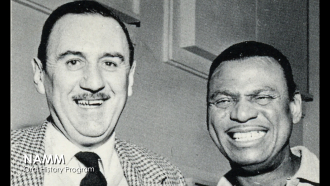
George Osztreicher pioneered importing and exporting guitar and violin string in the United Kingdom back in the 1960s. He formed British Music Strings after working for General Guitar Strings and Cardiff Music Strings. He soon discovered he could have a business based completely on exporting. The first American company to order from George was WMI in Chicago, which owned the Kay brand name. In later years George owned the name and was the first to bring guitars from Korea into the UK.  

©2010 NAMM, the National Association of Music Merchants