guitar effects

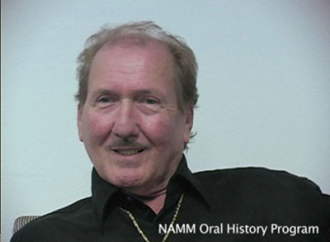
Davie Allan thumbnail

Davie Allan

Davie Allan was an early user of the fuzz tone boxes in the 1960s and put them to good use on a number of his instrumental hits with the Arrows. He also used the effects on many of the soundtrack works he completed for movie studios over the years. His pioneering sound has been an influence on many performers since his early recordings. Among his most popular songs is “Blues’ Theme” for the biker film The Wild Angels. The tune incorporated a heavily distorted guitar lick by Davie and was released as a single that made it to the Top 40 of the Billboard charts.

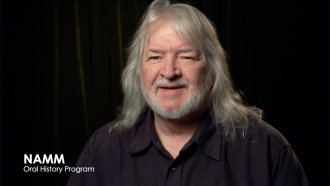
Mike Battle thumbnail

Mike Battle

Mike Battle invented the Echoplex, the pioneering electric effects device, which played a vital role in the early development of the rock and roll sound. The Echoplex was famously used by Sun Records founder Sam Phillips who used the echo effect on several of Elvis Presley’s first recordings (“Blue Moon” and “Mystery Train” showcase this sound beautifully). Over the years Jimmy Page used the Echoplex to create counter rhythms and country icon Chet Atkins recorded a unique slapback using the device. In the 1990s, Mr. Battle developed an echo device based on digital sound and electric mapping called Tubeplex. 

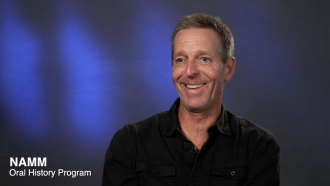
Chris Bristol thumbnail

Chris Bristol

Chris Bristol was a music retailer in Southern California when a salesman came in one day to show him some gear from a new company called Roland. Chris took to the products right away. With his background as a musician and engineer he could understand the dedication that was put into the products. In 1978 Chris was offered a job at Roland US as a salesman in the Pacific North West and as a service trainer for customer service. He helped launch the BOSS products for Roland, beginning at the June 1978 NAMM Show and has made major contributions to the success and expansion of the product line.
 

Del Casher thumbnail

Del Casher

Del Casher has an impressive scrapbook full of photographs from his career as a professional guitarist and inventor of music products, such as the early guitar effects called the Echo-Phonic. Among those photos is one of Del testing the Roland mini guitar and even one of Del performing alongside Elvis Presley from the movie Roustabout. Del has played an important role in the early years of the guitar effects innovations including the wah wah and Echo-Phonic products.
 

David Cockerell thumbnail

David Cockerell

David Cockerell designed one of the earliest synthesizers produced in the United Kingdom. The Synthi was introduced in the late 1960s by EMS Ltd. The unit, which came in a case with a KS keyboard, used patch cords to root reverb and ring modes. David also included two oscillators both with shape and level controllers as well as a frequency control. The design marked the beginning of many contributions to the industry over the years including his work on guitar effects pedals for Mike Matthews in the 1980s.
 

Michel Doidic thumbnail

Michel Doidic

Michel Doidic always enjoyed the technology behind electronic musical instruments. When he was younger he built his own guitar and other equipment before meeting Marcus Ryle while they both worked for Tom Oberheim. They later form a consulting company called Fast Forward Designs. The success of the company gave Michel and Marcus the idea to create their own products and so they created a new company called Line 6 to focus on guitar gear. The many product categories include their innovative POD products (such as the HD500), recording equipment, amplifiers (including the Spider Valve MkII), software (like GearBox), digital wireless, stompbox pedals, and the MIDI mobilizer among others.

Bernie Grundman thumbnail

Bernie Grundman

Bernie Grundman is the pioneering recording engineer and mastering studio founder who has played a vital role in the development of mastering studios around the world. Bernie is dedicated to the art of his craft. He has taught the subject to encourage others and to create a foundation of learning so that the fundamental elements of mastering and engineering in a studio setting are documented. It is Bernie’s hope that the next generation of engineers will add to what he and others have established. Bernie Grundman Mastering was established in 1984 in Hollywood, California and has since become an renowned institution in the world of recording. Over his career he has received two Grammy Awards and 14 TEC Awards for his many contributions to the industry.

Richard Harrison thumbnail

Richard Harrison

Richard Harrison owns and operates several music retail stores in the United Kingdom including well-known stores on Denmark Street. The street in London is often called the English Tin Pan Alley with shop after shop offering guitars, basses, drums, saxophones, sheet music and so much more. The best known of his shops is Rockers Music. Richard is also the president of Hiwatt Amplification in the UK.


Gary Stewart Hurst thumbnail

Gary Stewart Hurst

Gary Stewart Hurst is known around the industry as “Gary the Fuzzman” for being the inventor of the Tone Bender fuzz pedal, which he began producing in the 1960s. Jeff Beck and Jimmy Page started using Gary’s Tone Benders in 1965 and soon demand for his fuzz pedals came in from around the world. Gary continued to expand on his fuzz boxes and progressed to the Professional MKII, the product that put his name on the map, as well as designing the Marshall Supafuzz. Some of the top musicians who played a Tone Bender were the Beatles, Pete Townshend (The Who), Spencer Davis Group, Yardbirds, Mick Gee (Tom Jones’ Group) and many other British guitarists of the day, and this soon put Gary’s name on the map and in the history books!

Ikutaro Kakehashi thumbnail

Ikutaro Kakehashi

Ikutaro Kakehashi, the founder of Roland Corporation, has created more than a successful business with a host of important innovations in electronic musical instruments; he has also paid tribute throughout his career to those who first inspired him. Mr. Kakehashi was born in Japan and formed Ace Electronics in 1964 with the goal of improving the electronic organ, following up on the work of his heroes, Mr. Hammond and Mr. Leslie. With the expansion of electronics in the late 1960s, he formed the Roland Corporation, which soon became one of the leaders in the industry. Perhaps the only thing more impressive than Mr. Kakehashi’s success is his own personal energetic passion for music!
 

©2010 NAMM, the National Association of Music Merchants