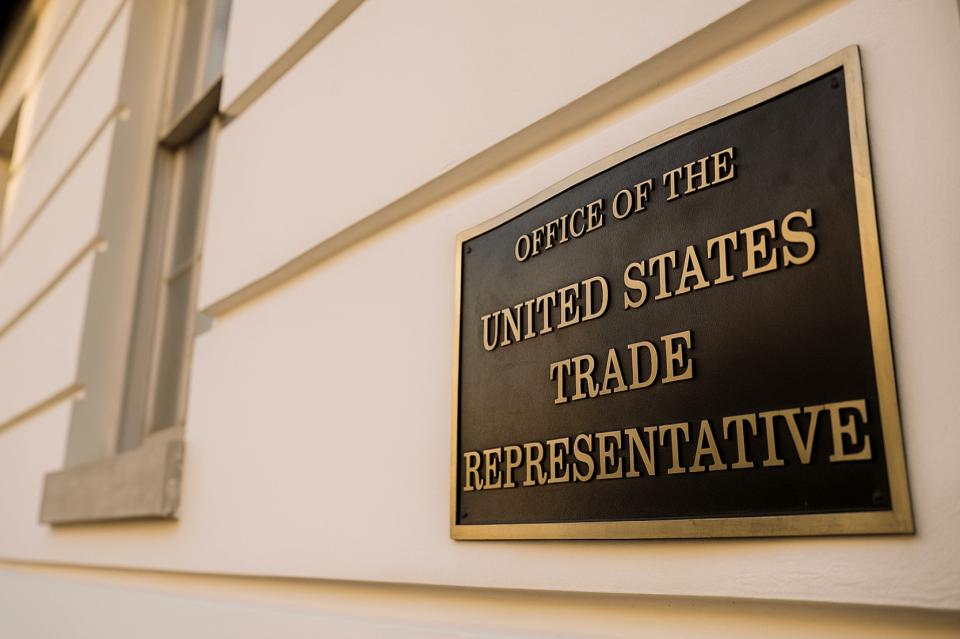
NAMM President and CEO John Mlynczak to Deliver Oral Testimony Before the USTR Section 301 Committee on Impact of Global Tariffs to Music Products Industry
NAMM Selected to Provide Critical Business Analysis During Four Days of Testimonies
Carlsbad, CA — May 4, 2026 — The National Association of Music Merchants (NAMM) has issued the oral testimony that will be delivered by NAMM President and CEO John Mlynczak before the Office of the United States Trade Representative (USTR) Section 301 Committee in Washington, D.C., on Friday, May 8. Mlynczak’s oral testimony will deliver a powerful narrative on the impact of tariffs on American businesses, music education, and consumers of musical instruments. This message enhances the case and data already provided in NAMM’s previously submitted written comments.
Read the full oral testimony that NAMM President and CEO John Mlynczak will deliver (HERE).
The USTR selected 151 associations and companies to provide in-person testimony to support the 811 written comments received. NAMM will be joining other well-established associations, such as Consumer Technology Association and Consumer Brands Association, to name a few.
In his testimony, Mlynczak will underscore the unintended consequences of current tariff policies on the U.S. music products industry, particularly as the Administration considers additional actions under Section 301 authority. NAMM continues to advocate for evidence-based trade remedies that do not disproportionately harm American manufacturers, retailers and students.
“Tariffs are tilting the playing field against American businesses and the millions of students who rely on affordable access to musical instruments,” Mlynczak said. “Our industry depends on a global supply chain built over generations. Policies that increase costs without expanding domestic capacity ultimately reduce participation in music education and weaken long-term U.S. competitiveness.”

NAMM Advocacy Actions for Section 301 Investigations
Announced on March 17, the Administration has indicated it may use the results of the Section 301 investigations into 16 countries relating to structural excess capacity and production to restore tariff levels previously imposed under the International Emergency Economic Powers Act (IEEPA).
NAMM submitted formal comments on April 15th calling on USTR to ensure that any trade remedies are precisely calibrated to the practices under investigation — and do not impose collateral harm on an industry that depends on open global trade to serve American students, schools, and musicians.
NAMM submitted oral testimony on April 28th and will testify in the Section 301 excess capacity hearing on May 8th, outlining the industry’s concerns and answering questions for the USTR Section 301 Committee.
Following the hearings from May 5-8, USTR is expected to propose specific remedies, triggering a second public comment period. NAMM will remain actively engaged throughout the process and will notify members when the next opportunity to provide input opens.
Core Message From NAMM Testimony
In his remarks, Mlynczak will emphasize:
- The U.S. music products industry represents $9 billion of a $19.5 billion global market, with NAMM representing more than 10,000 companies.
- Global supply chains for musical instruments rely on specialized materials and craftsmanship that cannot be replicated domestically.
- Tariffs are increasing costs for American manufacturers while giving foreign competitors pricing advantages.
- Entry-level instruments — critical for music education — are disproportionately affected, with imports of wind instruments down 27% and pianos down 20% in 2025.
- Reduced access to beginner instruments threatens the pipeline that sustains U.S.-made professional instruments and the broader music ecosystem.
NAMM is urging USTR to implement an exclusion process for musical instruments, components and materials for products under HTS Chapter 92 should they recommend tariffs.
“Music education and music-making are fundamental to American culture and economic vitality,” Mlynczak added. “We respectfully ask policymakers to ensure trade actions support — not hinder — the students, businesses and communities that power this industry.”
###
Media Contacts
NAMM Communications - John Dolak, Director
johnd@namm.org
619.735.4028
VITTEK PR – Josh Vittek
josh@vittekpr.com
760.505.5674
The Lippin Group
namm@lippingroup.com
201.317.6618
About NAMM
The National Association of Music Merchants (NAMM) is the not-for-profit trade association representing the $18.1 billion global music products industry, with a mission to strengthen the music industry and promote the pleasures and benefits of making music. Comprised of more than 9,000 member companies and individual professionals worldwide, NAMM supports an industry that employs more than 400,000 people globally. Through its programs, events and advocacy efforts, NAMM advances a shared vision of a thriving, innovative and inclusive music products industry where every person has access to the joy of music-making. NAMM also operates The NAMM Foundation, investing in the future of music through the support of education, global grantmaking and featured programs that expand participation in music across all ages and stages of life. Headquartered in Carlsbad, Calif., NAMM serves as a leading voice for the global music products industry through public policy, advocacy, education and other member services. For more information, visit NAMM.org, and learn more about NAMM’s Vision, Mission & Objectives at NAMM About Page.