What Is a Career in Lutherie? A Guide for Aspiring Instrument Makers
What Is a Luthier?
A luthier is a broad term for anyone who builds and/or repairs stringed musical instruments. Some luthiers specialize in building one type of stringed instrument. I, for instance, build electric guitars. In this article, I’ll talk about guitar builders, but the information will be generally applicable to other stringed instrument repair technicians and builders, as the skill set and lifestyle are very similar.
What Does a Luthier Do?
Luthiers build guitars, but a big part of this job is the design work you do before you begin to build.
There’s a long history of tradition in guitar building, and I think there’s a balance of following tradition and creating something new that is unique to yourself. You’ll have to decide what you want to build, and it will be personal to you depending on what you like and what you know.
The design process is artistic but also mathematical. The guitar is a tool that must function properly so there are certain fixed dimensions that the designer has to keep in mind. Being able to think artistically as well as structurally is helpful.
How Does a Luthier Make a Guitar?
As guitars are mostly made of wood, collecting the proper wood for each piece of the guitar — the body, the neck and the fretboard — is the first and one of the most critical tasks.
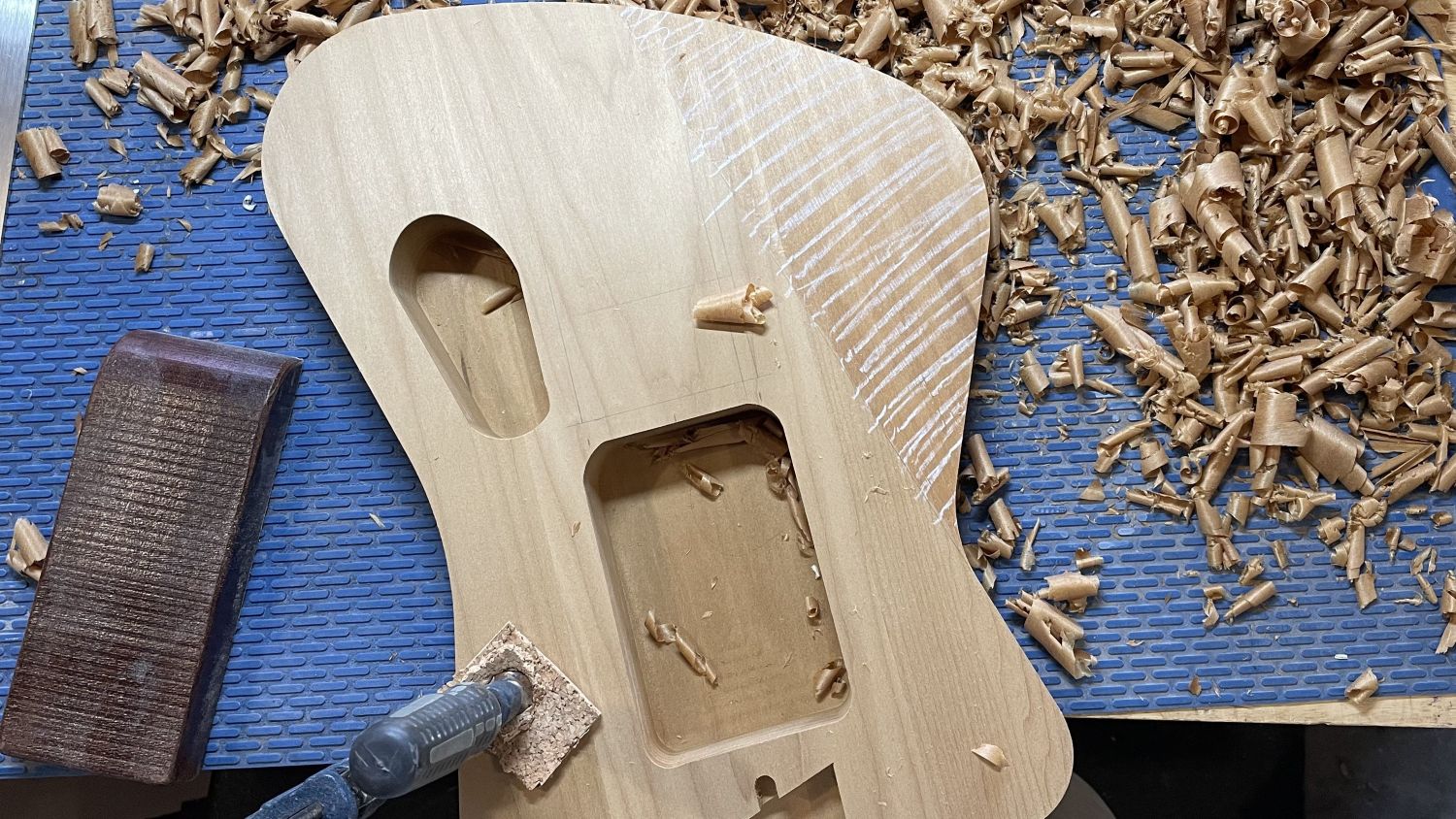
You can start with a chunk of wood and process it yourself or buy “blanks” from companies that have selected, dried and processed the wood for you. This ensures that you’re getting high-quality tonewood that’s ready to use. I cut the wood into the right shape for the guitar body, neck and fretboard and work it into the final shape, moving from machines to power tools, to hand tools.
Once the body and neck are done, it’s time for the finish work. Finishing is a whole world of its own. There are people who specialize in this field and make a living finishing other people’s guitars. You can spray a finish (nitrocellulose lacquer and polyurethane are two popular ones), which are usually level sanded and buffed to a nice shine once they cure. You can also use wipe-on finishes, such as oil or shellac, which have a short cure time and are easy to work with.
Once the finish is complete, now the assembly of the guitar begins with all the hardware and electronics. This involves soldering the wires of the pickups to knobs and switches, installing the pickguard, getting the bridge in the proper location, and stringing it up!
What a Day in the Life of a Luthier Looks Like
One of the things that drew me to lutherie is that I love creating things and I love project-based work. I always want to be challenging myself and working on something new.
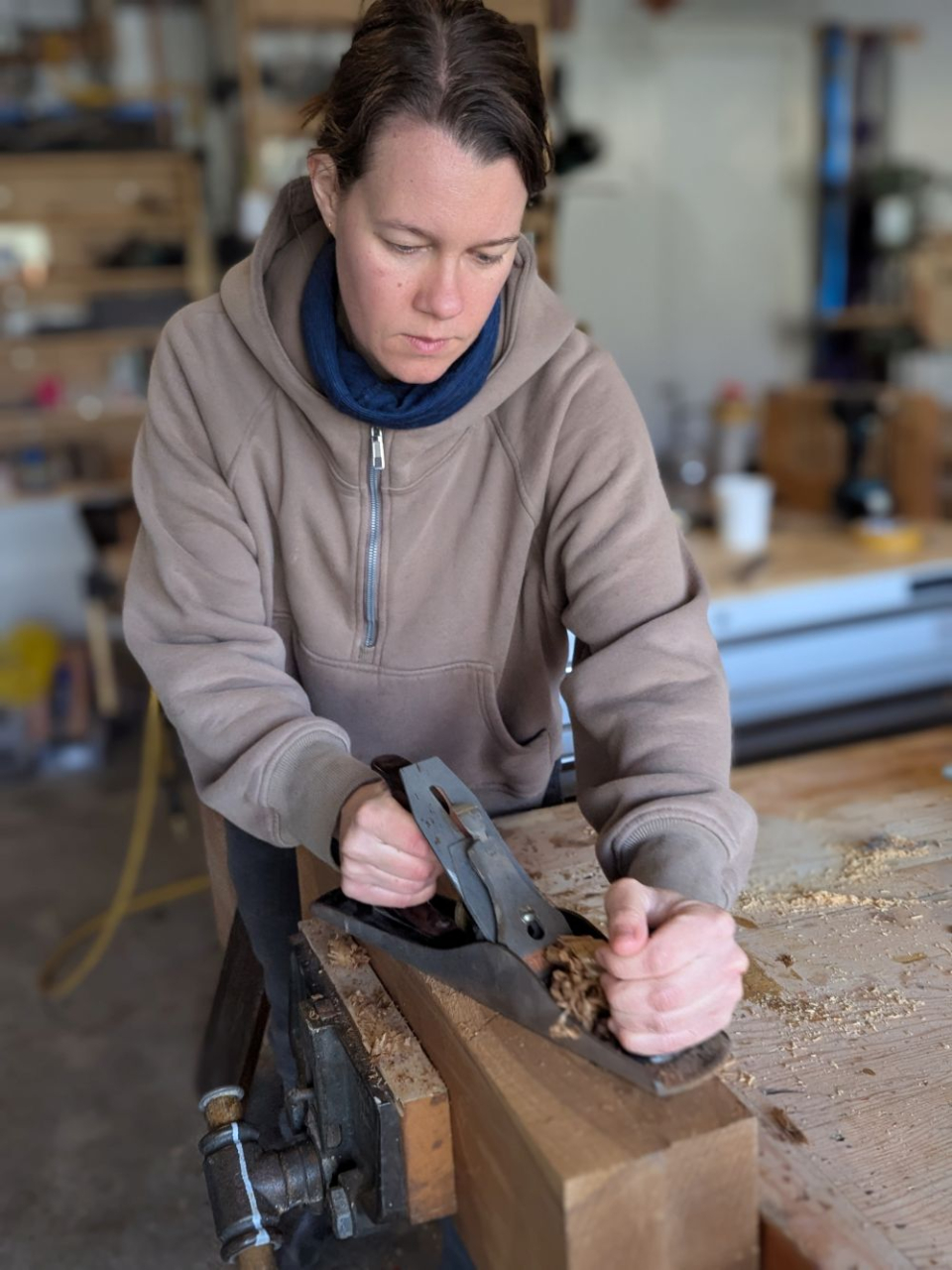
A normal workday for me is always changing, depending on what needs to be done. If you’re someone who loves a set schedule and predictable routine, lutherie may not be for you. I usually have multiple guitars in process at a time, and each one is often at a different stage. I’m constantly engaged in assessing where I am in the process and where I need to be, making sure that I’m properly planning ahead. I might need to make sure that I glue the fretboard to the neck today if I know I need to have it carved and ready for frets by tomorrow, because I know the glue needs to cure overnight.
Other than building and design, a normal day may also include tasks like corresponding with clients, ordering parts and materials, or researching a new product I might like to start using. A surprising amount of time can be spent on the computer.
Skills You Need to Succeed in Lutherie
As a guitar builder, you’ll need to have a wide array of skills. Here are a few that I put to work every day:
- Design thinking: I’m not just a woodworker — I’m a designer, and that enables me to create my own unique products. I’m not following plans, so I need to understand how the guitar functions and make informed decisions about my designs.
- Problem solving: Many things can go awry in a luthier’s shop. For example, a tool can break and you need to be able to fix it. Being able to figure out how to achieve a particular outcome can be tricky sometimes, and that’s where your ability to solve problems will help.
- Time management: Working alone, there is nobody around to keep you on track and give you your next task. You’ll have to manage yourself and make sure you’re staying on schedule. This requires a good amount of planning and prepping before getting your hands on a project.
- Business skills: Marketing and sales is something that many luthiers struggle with but is a crucial aspect you’ll need to embrace. I’m also my own accountant. I need to manage the finances of my business which requires rigid organization and documentation. These are all useful skills that contribute to a successful career in lutherie.
- Resilience: Guitar building does not provide instant gratification. The learning curve is long and the list of things that can go wrong is also long. You have to be willing to make a lot of mistakes before you succeed. The important thing is learning how to solve problems and, if needed, pivot to a new plan if your first idea doesn’t work out.
- Artistry: I have a background in music and art. I’ve always loved working with my hands and have learned how to make beautiful things with attention to detail and a steady hand. If you can relate, these skills will translate well for you if you choose guitar building.
- Comfort with alone time: A large portion of my work time is spent alone in my shop figuring out how to achieve a specific goal I have in mind or how to fix a particular problem or mistake. This work is well suited to introverts, as you end up spending a lot of time with yourself.
Different Career Paths in Lutherie
Hands-on experience
I know a great deal of guitar builders who learned how a good instrument is constructed and how to repair guitars by having lots of hands-on experience with many instruments. You can get hands-on experience with your own guitars — start to inspect them, take them apart, practice fretwork, etc.
Formal schools
Many paths exist to get into guitar building. There are formal schools across the country such as Roberto-Venn, Galloup or American School of Lutherie, which are excellent starting points to obtaining the basics and getting hands-on experience.
Learning from books
There are also many great books on lutherie. You can find books on how to build any specific type of stringed instrument. That’s an excellent starting point to begin to understand exactly what goes into building an instrument.
Apprenticeship
Lastly, there is the way of apprenticeship, which is how I learned — an excellent way to immediately start building and learning.
Finding an apprenticeship can be a challenge. Many luthiers want to hire someone who has already had some kind of experience either repairing or building. Some luthiers strictly take on students who have graduated from a guitar building school.
However, don’t let lack of experience hold you back. There is no harm in finding out if someone is willing to take you in or asking what qualifications they would require. I, for instance, found someone who was willing to give me a shot with no previous experience working on guitars or woodworking. It’s important to put yourself out there, make new connections and take advantage of any learning experiences you can get.
Advice From a Luthier
Whatever your path may be, there is always something you can start doing now. You don’t need a big shop with lots of tools to begin working on guitars. As I mentioned before, working on your own or your friends’ guitars is a great way to start learning. This is something you can do anywhere, with minimal tools. As long as you have the curiosity, willingness to learn and patience, you can start getting the feel for it.
The first hands-on work I did on a finished guitar was a fret level on my Epiphone Hummingbird. It was a great way to see and feel the results of my work. The online world is a great way to gain more insight into this field. Watching videos of other people building guitars helped me determine if this was something I wanted to do. You can learn a lot from other people online. A word of caution: make sure you’re learning from a reputable source.
Whatever you end up deciding, pursue what inspires and motivates you! If lutherie continues to excite you the more you explore it, follow your curiosity and take advantage of opportunities that come your way.
▸ ▸ ▸
Related Content
Music Industry Careers: Jobs in Music Products Manufacturing
An Introduction to the Music Products Industry
About the Author
Zoe Jet grew up in a small town in Northern California where she learned from a young age the value of making beautiful things. She has varied creative influences from her family and grew up making art. Her background includes singing in choirs, playing the drums in bands, and studying music composition. Drawn to working with her hands, Zoe eventually drew from her artistic and musical experiences to launch her guitar-building career. She trained under Barry Grzebik of Grez Guitars, bringing her ideas and visions into functional reality and designing with intention. Zoe is a passionate advocate of the music products industry and has participated as a panelist for the “Careers in Music: Women in Lutherie” education session at The NAMM Show.